


An international study led by a researcher from Lleida improves the identification of cervical cancer risk in Latin America
The research, carried out as part of the ESTAMPA project, establishes new risk estimates based on HPV testing, cervical smear tests and colposcopy
Cervical cancer is a disease that can be largely prevented thanks to early detection programmes. Despite these tools, it continues to cause thousands of deaths every year, particularly in countries with limited resources. A study led by Joan Valls, a researcher with the GReCS group at the Lleida Institute for Biomedical Research (IRBLleida), a professor at the University of Lleida and a senior scientist associated with the International Agency for Research on Cancer (IARC/WHO), Joan Valls, as part of the international ESTAMPA project, has developed new risk estimates that enable more accurate identification of women most likely to develop precancerous lesions or cervical cancer. The research has recently been published in the journal “The Lancet Regional Health - Americas”.
"This study represents a significant step forward because, for the first time, we have detailed estimates of the risk of precancerous cervical lesions based on a large population of women in Latin America. Until now, the main reference models had come from studies carried out in the United States, based on the Kaiser Permanente cohort. The ESTAMPA data enable us to move towards risk-based clinical management that is better adapted to the reality of Latin American healthcare systems, other countries with limited resources, and even contexts with limited resources within high-income countries," explained the researcher, Joan Valls.
The results confirm that the presence of HPV is the main risk factor. Women with a positive test result were far more likely to develop severe precancerous lesions than women with a negative result. Specifically, the risk of developing high-grade precancerous lesions is 12 per cent among HPV-positive women, compared with 0.04 per cent among women with a negative result. This risk rises to 62.9 per cent in women with a high-grade smear result and reaches 70.2 per cent when, in addition, colposcopy revealed visible abnormalities on the cervix.
The study also shows that women infected with HPV types 16 and 18 - which are responsible for the majority of cervical cancer cases - are at a particularly high risk of developing high-grade lesions. This reinforces the importance of combining different tests to guide clinical decisions based on individual risk, thereby advancing what is known as precision screening.
This study has received support from several international organisations, including the International Agency for Research on Cancer (IARC), the World Health Organisation (WHO), the Pan American Health Organisation (PAHO), the US National Cancer Institute (NCI), as well as research and public health bodies in Argentina, Colombia, Costa Rica and Paraguay, in addition to the collaborating institutions participating in the project.
Article: Valls J. et al. Estimating Cervical Precancer and Cancer Risk Based on HPV Testing, Cervical Cytology and Colposcopic Impression: Results From the ESTAMPA Multicentric Study in Latin America. SSRN, 2025. Available at SSRN: https://ssrn.com/abstract=6831597 or http://dx.doi.org/10.2139/ssrn.6831597
Text: IRBLleida Communications and Press Office
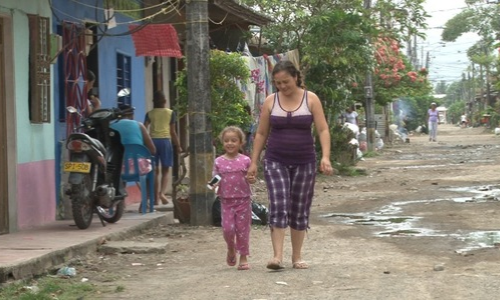
The image shows a daily scene in one of the communities where the ESTAMPA project was developed. Author: World Health Organization

