


A new approach to tackling resistance to melanoma treatments
Thanks to research co-led by the University of Lleida – IRBLleida and Queen Mary University of London
Melanoma cells learn to protect themselves from treatment and alter the defences surrounding them, enabling them to continue growing despite the drugs. This is one of the findings identified by a group of researchers from the University of Lleida (UdL) - the Lleida Institute of Biomedical Research (IRBLleida) - and Queen Mary University of London. The research has been published in the Journal of Experimental and Clinical Cancer Research.
The research was co-led by the principal investigators from the Oncological Pathology group, Rosa M. Martí and Anna Macià, in collaboration with Oscar Maiques, head of the group at Queen Mary University of London. They have discovered that melanomas with a BRAF mutation can develop resistance to targeted therapies. Specifically, these cells promote the presence of tumour-associated macrophages - immune cells that help the cancer evade the action of drugs and the immune system.
'The results suggest that combining current treatments with strategies aimed at blocking this immunosuppressive response could improve the efficacy of therapies and help to prevent or delay the development of resistance,' explained Anna Macià, a researcher in the Oncological Pathology group and a lecturer at the UdL.
Melanoma is the most aggressive form of skin cancer and, despite advances in targeted therapies and immunotherapy, many patients eventually develop resistance to the drugs. This means that, over time, the tumour begins to grow again.
Understanding how melanoma communicates with the immune system and modifies its environment is essential for developing new therapeutic strategies. This research has therefore investigated the mechanisms that enable melanoma to evade current treatments and has identified potential new targets to improve efficacy.
The study involved an in vitro analysis and patient samples. The research team observed that patients with higher levels of certain tumour-associated macrophages, identified by the CD206 marker, had lower survival rates. Furthermore, the analysed data showed that, when melanoma becomes resistant to BRAF inhibitors (drugs that inhibit one of the main 'drivers' fuelling the growth of many melanomas), the presence of these macrophages with immunosuppressive functions increases, helping the tumour to evade the immune system's control.
The research has also shown that blocking the M-CSF protein makes it possible to reprogramme this tumour microenvironment, reduce the infiltration of cancer-promoting macrophages and improve the efficacy of treatments in experimental models.
The study has received funding from the Carlos III Health Institute (ISCIII), with co-funding from the European Union, and support from several national and international research institutions, including the University of Lleida, IRBLleida, the Provincial Council of Lleida, AGAUR, Cancer Research UK and Barts Charity.
Article: Sisó, P., Maiques, O., Gracia-Bolívar, J. et al. M-CSF-driven TAM remodelling and actomyosin reactivation underlie BRAFi resistance in melanoma. J Exp Clin Cancer Res (2026). https://doi.org/10.1186/s13046-026-03830-3
Text: Comunication & Press IRBLleida
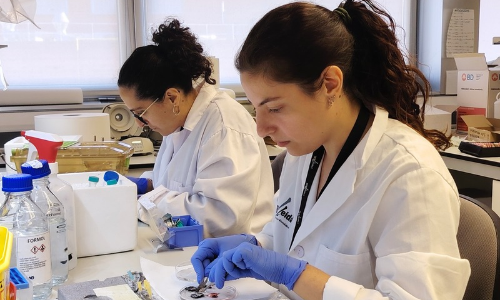
Researchers from the Oncological Pathology Research Group, Anna Macià Armengol and Judit Gracia Bolivar

