

IRBLleida develops an automated and sustainable methodology to advance precision medicine using plasma samples
The technology makes it possible to minimize the use of organic solvents, toxic reagents and chemical waste, while maintaining high analytical standards
The research team from the +Pec Proteomics group at the Biomedical Research Institute of Lleida ((IRBLleida) and the University of Lleida (UdL) has developed and validated a new automated methodology for studying the metabolome in human plasma samples. The system, published in the journal Green Analytical Chemistry, drastically reduces the use of organic solvents and chemical waste, while maintaining high analytical capacity and opening up new opportunities for the discovery of currently unknown disease mechanisms, as well as biomarkers with future applications in disease diagnosis and prognosis.
The metabolome is the set of small molecules that circulate in the human body and reflect what is happening in the body at any given time. These molecules, known as metabolites, are the result of processes such as diet, physical activity, organ function, medication use and disease.
The research, led by the two heads of the +Pec Proteomics group, Xavier Gallart-Palau and Aida Serra Maqueda,, who are also lecturers at the UdL, has resulted in the AROMA-GC-MS platform (Automated Rapid Organic-Solvent-Free Metabolomics), a protocol that enables the study of metabolites present in blood through a fully automated process compatible with the principles of green analytical chemistry.
"Despite its great potential in precision medicine, metabolome analysis still faces major limitations, as many current methodologies require large sample volumes, intensive use of chemical solvents and long, complex preparation processes", explained Xavier Gallart-Palau.
To overcome these limitations, the IRBLleida team has optimized a technology widely used in areas such as food safety, toxicology, airport and official agency security, and environmental analysis, but which remains underused in the clinical field. The new protocol can reproducibly detect more than one hundred metabolites in each analysis using an extremely small amount of plasma, equivalent to a small drop of blood, without the need for organic solvent extraction.
According to the study, the system combines high analytical sensitivity with a significant reduction in the environmental impact of laboratory processes. Its automation also improves the reproducibility of results and supports its future implementation in clinical and biomedical research settings.
"This methodology provides relevant information on metabolic processes associated with oxidative stress, lipid metabolism and energy regulation, and lays the groundwork for future studies aimed at identifying biomarkers related to different diseases", said Aida Serra Maqueda.
The research was carried out in collaboration with the clinical laboratory of the Arnau de Vilanova University Hospital and the IRBLleida Biobank, strengthening its translational potential and future applicability in the healthcare field.
This research received funding from the Instituto de Salud Carlos III (ISCIII), the Ministry of Science and Innovation, the State Research Agency (AEI), the European Union through the NextGenerationEU and ESF+ programmes, the Government of Catalonia, the University of Lleida, the Diputació de Lleida and the CERCA programme. The study also received support from competitive research contracts, including Miguel Servet, Ramón y Cajal and AGAUR predoctoral grants.
Article: Lisa-Molina, J., Sánchez Milán, J. A., Font-Alberich, M., Pico, S., Yuguero, O., Serra, A., & Gallart-Palau, X. (2026). Automated rapid organic-solvent-free metabolomics via Arrow-GC-MS: An optimized green workflow for human plasma profiling. Green Analytical Chemistry, 100376.
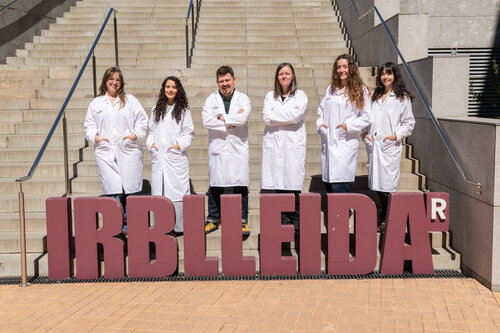
The research team from the +Pec Proteomics group at the Biomedical Research Institute of Lleida (IRBLleida)

