

A compound derived from a medicinal plant protects the intestinal epithelium against inflammation
IRBLleida and UdL identify it as a treatment strategy for Crohn's disease and ulcerative colitis
A compound derived from a medicinal plant called potassium dehydroandrographolide succinate (KDAS) has the ability to protect the intestinal epithelium-the lining of the intestines-against inflammatory bowel disease (IBD), which includes Crohn's disease and ulcerative colitis. This was discovered in a cell-level study led by researchers from the University of Lleida (UdL) and the Lleida Institute for Biomedical Research (IRBLleida). The finding opens the door to a new therapeutic strategy for preserving the integrity of the intestinal mucosa during inflammatory flare-ups. The study, published in the prestigious journal *Scientific Reports*, involved the Pharmacy Department at Arnau de Vilanova University Hospital and researchers from the Autonomous University of Barcelona.
KDAS, known in China as Chuanhuning (穿琥宁), is the potassium salt of a semisynthetic derivative of andrographolide, derived from the plant Andrographis paniculata. In China, it has long been used to treat upper respiratory tract infections, pediatric pneumonia, and bacillary dysentery. Although its anti-inflammatory properties were already known, its mechanism of action and its effects on the intestinal epithelium during inflammation were previously unknown.
Research has confirmed that KDAS is a potent inhibitor of cell death induced by tumor necrosis factor alpha (TNF-*α), a key molecule in intestinal inflammatory processes. It works by reducing the activation of caspase-8, a protein that plays a central role in the mechanisms of apoptosis (programmed cell death) associated with TNF-α. Unlike conventional treatments, which are primarily aimed at controlling the inflammatory response, this potassium salt acts by directly protecting epithelial cells from cell death, thereby helping to preserve the integrity of the intestinal barrier.
Judit Ribas Fortuny and Joan Antoni Schoenenberger, professors of Pharmacology at the UdL School of Medicine and researchers in the Pharmacology and Molecular Microbiology group at IRBLleida, have led the screening of more than 2,400 clinically approved drugs to identify options that restore protection of the gastrointestinal tract mucosa (cytoprotection). The team has conducted experiments in laboratory studies using human cells and intestinal epithelium, including samples from healthy donors. Among all the candidates, KDAS has shown the best results, with the ability to protect more than 85% of intestinal epithelial cells from death caused by TNF-α.
"Currently, anti-TNF treatments are one of the main therapeutic tools for inflammatory bowel diseases, but they do not always succeed in fully restoring the integrity of the intestinal epithelium," explains Ribas. "Our results show that KDAS protects epithelial cells from TNF-α-induced death, a finding that could complement current treatments," he adds.
This study, which received funding from the Ministry of Science, Innovation, and Universities and the Agency for the Management of University and Research Grants (AGAUR), "is particularly significant because it highlights the potential of a therapeutic concept that has yet to be fully explored: the development of drugs specifically designed to protect the intestinal epithelium from inflammatory damage," notes the researcher. "This approach could complement existing treatments and pave the way for a new generation of drugs designed to preserve the integrity of the intestinal barrier," concludes the UdL professor of Pharmacology.
Text: Press UdL
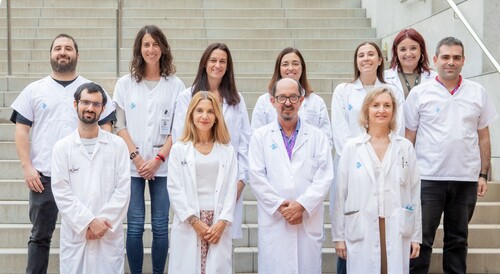
Pharmacology and Molecular Microbiology Group

