

Researchers have identified a new molecular mechanism that explains why some endometrial cancers are more aggressive
A study led from Lleida describes how endometrial tumour cells alter their environment to facilitate the spread of cancer, with CXCL16 playing a key role
A study led from Lleida has identified a new molecular mechanism that contributes to the progression of endometrial cancer, one of the most common gynaecological cancers. Endometrial cancer often involves alterations in the ARID1A gene, which lead to the loss or malfunction of its protein and are associated with more aggressive forms of the disease. This study demonstrates that when tumour cells lose ARID1A, it not only affects the tumour cells themselves, but also reprogrammes their behaviour, altering the substances they release into their environment (known as the 'secretome'). This change alters the tumour microenvironment, facilitating communication with neighbouring cells and creating conditions that promote tumour growth, its ability to invade, and greater resistance to treatments.
The research, led byNúria Eritja,, a researcher in the Oncological Pathology group at the Lleida Biomedical Research Institute (IRBLleida) and the University of Lleida (UdL), involved collaboration with staff from the Biomedical Research Network Centre for Cancer (CIBERONC), the Bellvitge Institute of Biomedical Research (IDIBELL) and the Arnau de Vilanova University Hospital in Lleida. The study has been published in the journal Cell Death & Disease.
In most cases, endometrial cancer has a good prognosis when detected at an early stage. However, a subgroup of patients eventually develops more aggressive forms or advanced disease, with a poorer outcome. Understanding the genetic and molecular mechanisms underlying this heterogeneity is essential for the development of more effective and personalised therapies.
The study, conducted in mouse models and human tissue samples, has identified CXCL16 as a key molecule produced by tumour cells. This protein alters the tumour microenvironment and creates a more favourable context for cancer cells to invade other tissues and form metastases.
"Thanks to this research, we have observed that blocking the CXCL16 molecule or its receptor, CXCR6, can reduce the migratory capacity of cancer cells and limit the formation of metastases. This suggests a potential new therapeutic strategy for patients with more aggressive or advanced forms of the disease," explained the article's lead author, Cristina Megino, who currently works at the Icahn School of Medicine at Mount Sinai in New York.
The project was funded by the Contigo Contra el Cáncer de la Mujer Foundation, the Carlos III Health Institute, the European Regional Development Fund "a way to make Europe", and the Lleida Institute of Biomedical Research.
Article: Megino-Luque, C., Albertí-Valls, M., Olave, S. et al. ARID1A deficiency reprograms the tumor secretome, enhancing microenvironmental remodeling and metastatic dissemination in endometrial carcinoma. Cell Death Dis (2026). https://doi.org/10.1038/s41419-026-08723-z
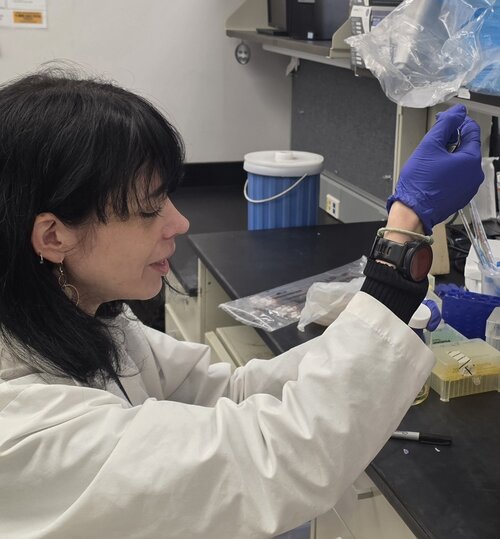
The researcher Cristina Megino

