

Researcher Robert Montal, a speaker at the AECC’s conference "Research projects that drive life projects"
It has unveiled the precision immunotherapy project for gastric cancer
Yesterday, 16 September, the Lleida Cancer Association held a conference entitled 'Research projects that drive life projects', an initiative organised as part of World Cancer Research Day which highlighted advances in cancer research and their impact on the lives of people with cancer. One of the highlights of the event was the panel discussion 'Research that Transforms Lives', which featured Robert Montal, a medical oncologist and researcher from the Cancer Biomarker Research Group (GReBiC) at IRBLLeida; Nerea Morillo, a digestive oncology nurse at the Arnau de Vilanova University Hospital in Lleida; Carme Barberà, a patient; and Miquel Bressolí, a family member.
Montal presented the project 'Precision Immunotherapy for Gastric Cancer', which has been awarded a three-year AECC 2026 Senior Clinical Researcher Grant worth 240,000 euros, with a possible one-year extension.
The project aims to provide personalised medicine for patients with gastric cancer, identifying, on the one hand, those who may derive the greatest clinical benefit from traditional immunotherapy; and, on the other, seeking therapeutic alternatives for the remaining patients.
Gastric cancer is the fifth most common malignant tumour in the world and the fourth deadliest. In Spain, it causes around 5,000 deaths each year. Despite advances in prevention and early diagnosis, it is often diagnosed at an advanced stage, when the chances of a curative treatment are limited.
In recent years, immunotherapy has been shown to improve survival in some patients with gastric cancer. However, not everyone responds to the treatment in the same way. Indeed, one of the challenges facing research was to determine which tumour characteristics can predict this response.
To tackle this challenge, the project proposes using artificial intelligence to analyse images of tumour biopsies and identify different immunological subtypes of gastric cancer.
This tool will be validated using spatial transcriptomics, a technology that enables the analysis of gene activity in different regions of tumour tissue. Subsequently, its potential as a predictor of response to immunotherapy will be clinically evaluated in patients who have already undergone treatment at various hospitals.
The aim is to move towards precision medicine, which will provide more information to determine which treatment might be most suitable for each individual.
The event, which was chaired by Eva Figuera, Manager of the Lleida Cancer Association, brought together healthcare professionals, researchers, patients and their families at the Lleida College of Physicians with the aim of sharing how research is helping to advance our understanding, diagnosis and treatment of cancer. Through the event 'Research projects that drive life projects', the Lleida Cancer Association sought to raise the profile of projects aiming to turn scientific advances into new opportunities for people with cancer. The event provided an opportunity to share knowledge and experiences from different perspectives and highlighted the role of research, healthcare professionals, researchers, patients and families in the fight against cancer.
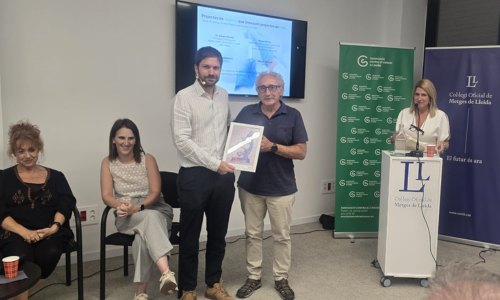
Participants in the round-table discussion ‘Research that transforms lives’

