

Decisions on conscientious objection to euthanasia are influenced by ethical, emotional and contextual factors
These are the findings of a study funded through the IRBLleida Biomedical Research Projects Call, Alt Pirineu i Aran 2024 modality, financed by the Provincial Council of Lleida
Conscientious objection to euthanasia and voluntary assisted dying is a complex phenomenon shaped by ethical, emotional, professional and organisational factors. This is one of the main conclusions of the study Conscientious Objection in Euthanasia and Voluntary Assisted Dying From the Perspective of Stakeholders: A Meta-Synthesis, recently published in the Journal of Clinical Nursing.
The research, led by Rosa Maria Pérez Capellades, Coordinator of Quality and Patient Safety at the Hospital Comarcal del Pallars, examined the different perspectives on conscientious objection expressed by healthcare professionals, students, patients, family members and regulatory frameworks. The aim was to gain a better understanding of the motivations behind this decision in settings where euthanasia or voluntary assisted dying are legally available.
To do so, the research team conducted a qualitative systematic review of fifteen studies published mainly between 2019 and 2023 in countries including Canada, Australia, the United States, Spain and the Netherlands. Using a meta-aggregation methodology, the researchers identified two broad categories of motivations: moral motivations, related to ethical principles, moral convictions and religious beliefs; and non-moral motivations, associated with factors such as perceived professional competence, the social context and the emotional responses generated by participation in these procedures.
"Our findings show that reducing conscientious objection solely to religious or ideological convictions is an oversimplification. Healthcare professionals' decisions are also influenced by personal experiences, feelings of responsibility, fear of stigma and concerns related to clinical practice," explained Pérez Capellades.
The study concludes that distinguishing between moral and non-moral motivations is essential to understanding the diversity of existing positions and to ensuring the appropriate management of conscientious objections within healthcare systems. The authors point out that clear protocols and institutional frameworks can help balance the rights of healthcare professionals with those of patients requesting these legally recognised services.
In addition, the researchers highlight the need to promote spaces for ethical dialogue and to provide tools that help healthcare professionals, patients and families navigate complex end-of-life situations. According to the study, a better understanding of this phenomenon can support informed decision-making and contribute to care that is more respectful of the diversity of values present in today's society.
This research was funded by the Provincial Council of Lleida (Diputació de Lleida - La força dels municipis) through the IRBLleida IREP 2024 Biomedical Research Projects programme, Alt Pirineu i Aran modality (grant PP10913), and by the Spanish Ministry of Science, Innovation and Universities (grant PID2022-140179OB-I00).
Article: Pérez-Capellades, R., S. Ramos-Pozón, D. Pasten-Araya, and A. Falcó-Pegueroles. 2026. Conscientious Objection in Euthanasia and Voluntary Assisted Dying From the Perspective of Stakeholders: A Meta-Synthesis. Journal of Clinical Nursing, 1-20. https://doi.org/10.1111/jocn.70442.
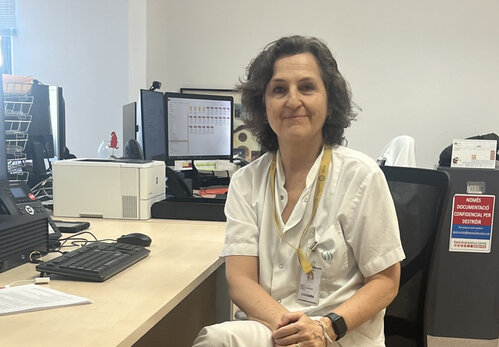
The researcher Rosa Maria Pérez Capellades
