


Type 2 diabetes subtypes identified in a catalan population
This research has implications for the implementation of precision personalized medicine strategies
A study involving researchers from the Research group of health care (GReCS) at the Biomedical Research Institute of Lleida (IRBLleida) has demonstrated that clinically relevant subtypes of type 2 diabetes can be identified from the time of diagnosis in a Catalan population, with important implications for the implementation of precision personalized medicine strategies.
"The results, published in Cardiovascular Diabetology, pave the way for a more accurate classification of the disease that could help personalize patient monitoring and treatment from the earliest stages," says the study coordinator, Dídac Mauricio, Scientific Director of the Diabetes and Metabolic Diseases Area of CIBER (CIBERDEM) and researcher at Hospital de la Santa Creu i Sant Pau in Barcelona.
The study included 991 individuals with newly diagnosed type 2 diabetes, recruited between 2022 and 2026 from 28 healthcare centres in Barcelona and Lleida as part of the prospective COPERNICAN study. Using a statistical clustering method based on six clinical variables-age at diagnosis, glycated haemoglobin (HbA1c), body mass index, pancreatic beta-cell function, insulin resistance, and the presence of islet autoantibodies-the research team replicated the classification model proposed by the Swedish group led by Emma Ahlqvist, which distinguishes five subtypes of type 2 diabetes.
A Classification Better Suited to the Catalan Population
The results confirmed the existence of the phenotypes previously described in Scandinavian populations: severe autoimmune diabetes (SAID), severe insulin-deficient diabetes (SIDD), severe insulin-resistant diabetes (SIRD), mild obesity-related diabetes (MOD), and mild age-related diabetes (MARD). However, the study found that the classification of the latter four groups showed limited statistical stability in the Mediterranean population, with none of the groups reaching the predefined stability threshold.
When the analysis was allowed to determine the optimal number of groups freely, researchers found that, in addition to the autoimmune diabetes group, a solution consisting of three additional clusters showed substantially greater stability: an obesity and insulin resistance phenotype, an insulin-deficient phenotype, and an age-related phenotype. "These findings suggest that the metabolic heterogeneity of type 2 diabetes in our population may be better represented by a four-group structure, which has important implications for how we assess and classify patients from the moment of diagnosis," explains Mauricio.
The study also found that the obesity-related diabetes subgroup (MOD) did not show clear separation within this cohort, instead being distributed across the other groups. This suggests that, in Mediterranean populations, this phenotype may represent an intermediate metabolic spectrum rather than a distinct clinical entity.
Towards Precision Medicine in Diabetes
Because the classification was performed at the time of diagnosis, before treatment initiation, the COPERNICAN cohort provides a unique opportunity to investigate whether these metabolic subtypes are associated with different cardiovascular risk profiles over time. "Early identification of these phenotypes could allow us to stratify cardiovascular risk more accurately and guide preventive interventions in a more individualized way," adds Berta Fernández-Camins, first author of the article and researcher at the University of Barcelona and Hospital de la Santa Creu i Sant Pau.
The study also involved the research group led by Àlex Perera from the Bioengineering, Biomaterials and Nanomedicine Area of CIBER (CIBER-BBN), who is also a researcher at the Universitat Politècnica de Catalunya. Researchers from IDIAP Jordi Gol, the University of Lleida, and IRBLleida, among other institutions, also contributed to the work.
"This is the first study specifically designed to evaluate the Ahlqvist phenotypic classification in a newly diagnosed Mediterranean cohort, unlike most replication studies, which have relied on pre-existing cohorts. The longitudinal follow-up of participants will enable future analyses of the evolution of each subgroup, their response to treatments, and the development of complications," the research team concludes.
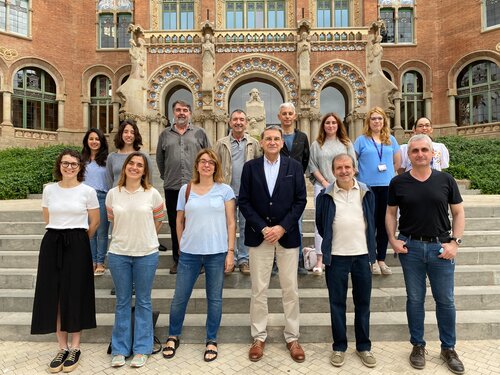
The reseachers of the Diabetes and Metabolic Diseases Area of CIBER (CIBERDEM) group

