


The hidden health issues in the countryside: the social and working conditions that undermine the well-being of seasonal migrant workers
Job insecurity, long working hours, social exclusion, inadequate housing conditions, lack of access to healthcare and gender inequalities are the associated factors
A new study led from Lleida highlights the high prevalence of perceived poor health among seasonal migrant agricultural workers in Spain, a situation closely linked to social and occupational factors. The research, recently published in the journal Public Health, analyses how variables such as gender, age, immigration status and alcohol consumption influence the perceived health of this particularly vulnerable group.
This new article forms part of a research project on health, migration and social inequalities in the seasonal agricultural workforce (PI20/01310: "Migration and agricultural work in Spain: socio-occupational precariousness and health (2020-24)"), which has published various articles in this field.
The study, which involved researchers from the Healthcare Research Group (GReCS) (GReCS) at the Lleida Institute of Biomedical Research (IRBLleida), the Group for Studies on Society, Health, Education and the Culture of Care (GESEC) at the University of Lleida, the University of Logroño and the University of Almería, analyses how social and working conditions influence the perceived health of migrants working as seasonal agricultural workers. Based on 623 surveys of men and women from the Maghreb and sub-Saharan Africa in Andalusia (Almería and Huelva), Lleida and La Rioja, the results show that poor perceived health is common among migrants working in the fields, and that this situation particularly affects women, people without residence permits, or those living in the southern regions of Spain. Certain health conditions, such as respiratory, circulatory, musculoskeletal and mental health problems, were also associated with a poorer perception of health.
‘The study suggests that health and well-being depend on a range of structural factors such as educational attainment, administrative status and social isolation, as many of these people face difficulties in accessing basic services, which exacerbates their vulnerability,’ explained Erica Briones, a researcher and lecturer at the University of Lleida. ‘Understanding these factors is key to designing fairer and more effective public policies that protect the health of those who play an essential role in the agri-food system,’ confirmed the researcher.
This study stems from concern for the living and working conditions of seasonal migrant workers, a group that is both vulnerable and essential to the agricultural sector yet often overlooked. In the short term, the findings may help to highlight the vulnerable situation of seasonal migrant workers, enabling healthcare professionals, social organisations and public authorities to better understand their needs.
In the medium term, this knowledge can help guide more equitable public policies, improve working and housing conditions, and promote better access to healthcare services. Ultimately, the study aims to help reduce health inequalities and promote better living conditions.
'The study suggests that health and well-being depend on a range of structural factors such as educational attainment, administrative status and social isolation, as many of these people face difficulties in accessing basic services, which exacerbates their vulnerability,' explained Erica Briones, a researcher and lecturer at the University of Lleida. 'Understanding these factors is key to designing fairer and more effective public policies that protect the health of those who play an essential role in the agri-food system,' confirmed the researcher.
This study stems from concern for the living and working conditions of seasonal migrant workers, a group that is both vulnerable and essential to the agricultural sector yet often overlooked. In the short term, the findings may help to highlight the vulnerable situation of seasonal migrant workers, enabling healthcare professionals, social organisations and public authorities to better understand their needs.
In the medium term, this knowledge can help guide more equitable public policies, improve working and housing conditions, and promote better access to healthcare services. Ultimately, the study aims to help reduce health inequalities and promote better living conditions.
The research was funded by the Carlos III Health Institute (ISCIII), co-funded by the European Regional Development Fund/European Social Fund 'A way to make Europe/Investing in your future', and the Department of Health of the Government of Catalonia.
Article: Valls J, Mateos JT, Rodríguez-Guerrero LA, González-Rodríguez A, Andrés-Cabello S, Jiménez-Lasserrotte MDM, Gea-Sánchez M, Briones-Vozmediano E. Socio-demographic and occupational determinants of poor self-perceived health among seasonal migrant farmworkers: A cross-sectional analysis. Public Health. April 2026;253:106197. doi: 10.1016/j.puhe.2026.106197. Epub 18 February 2026. PMID: 41712965.
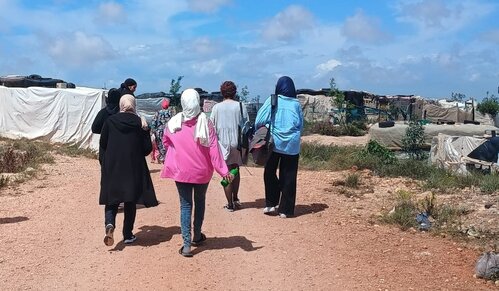
This new article forms part of a research project on health, migration and social inequalities in the seasonal agricultural workforce (PI20/01310: "Migration and agricultural work in Spain: socio-occupational precariousness and health (2020-24)")

