


The vital signs in the first hours after admission can predict how long a patient with chronic obstructive pulmonary disease or heart failure will remain hospitalised
Data such as heart rate, respiration and oxygen saturation during the first 24 hours open the door to better planning of hospital care
The vital signs that are routinely checked when a person is admitted to hospital can predict the length of their stay. A scientific study has shown that a detailed analysis of heart rate, breathing and oxygen saturation during the first 24 hours of admission can predict with great accuracy how long a patient with chronic obstructive pulmonary disease (COPD) or heart failure will remain in hospital.
The research, led by researchers from the Centre for Biomedical Research in Respiratory Diseases (CIBERES) and the Lleida Biomedical Research Institute (IRBLleida), has been published in the Scandinavian Journal of Trauma, Resuscitation and Emergency Medicine and opens the door to better planning of hospital care using data that is already routinely collected.
Measuring vital signs is standard practice in hospitals. In this study, the research team went a step further, analysing how these signs vary over time to look for patterns, fluctuations and regularities that reflect the patient's actual condition.
o this end, data from 74 patients admitted to a general ward (not the ICU) were studied, and these patients were continuously monitored during the first 24 hours. Based on this data, characteristics of vital signs that are clearly related to length of stay have been identified. The Department of Internal Medicine at Santa María University Hospital and the Department of Pulmonology at Arnau de Vilanova University Hospital participated in the research.
'The results show that certain patterns in heart and respiratory rate, as well as small fluctuations in oxygen saturation, are strongly associated with shorter or longer hospital stays,' explained the last author of the article and researcher in the Translational Respiratory Medicine research group, Jordi de Batlle. 'By combining these data in a predictive model, we have achieved a very high predictive capacity, with accuracy in the vast majority of cases,' he added.
According to the authors, this tool is not intended to replace medical judgement, but rather to complement it. Being able to anticipate the likely length of a hospital stay can help healthcare professionals to better plan resources, tailor care to each patient and improve hospital organisation. 'Furthermore, the fact that the model is based on already available data makes its potential clinical application more realistic and accessible,' adds the article's first author, Iván Juez, a researcher in training with the Translational Research in Respiratory Medicine group.
'This feasibility study demonstrates the potential of continuous monitoring and advanced data analysis to move towards more predictive and personalised medicine, especially in patients with common chronic diseases such as COPD and heart failure,' said Gerard Torres, researcher and consultant at the Santa María University Hospital in Lleida.
The project was funded by the Carlos III Health Institute, the European Union and the ICREA Academia programme, as well as two grants from SEPAR 2022 and SOCAP 2023.
Article: Juez-Garcia I, Benítez ID, Torres G, González J, Utrillo L, Pérez A, Varvará N, Cuadrat I, Barbé F, de Batlle J. Continuous vital sign monitoring for predicting hospital length of stay: a feasibility study in chronic obstructive pulmonary disease and chronic heart failure patients. Scand J Trauma Resusc Emerg Med. 2025 Sep 24;33(1):150. doi: 10.1186/s13049-025-01458-4. PMID: 40993754; PMCID: PMC12462186.
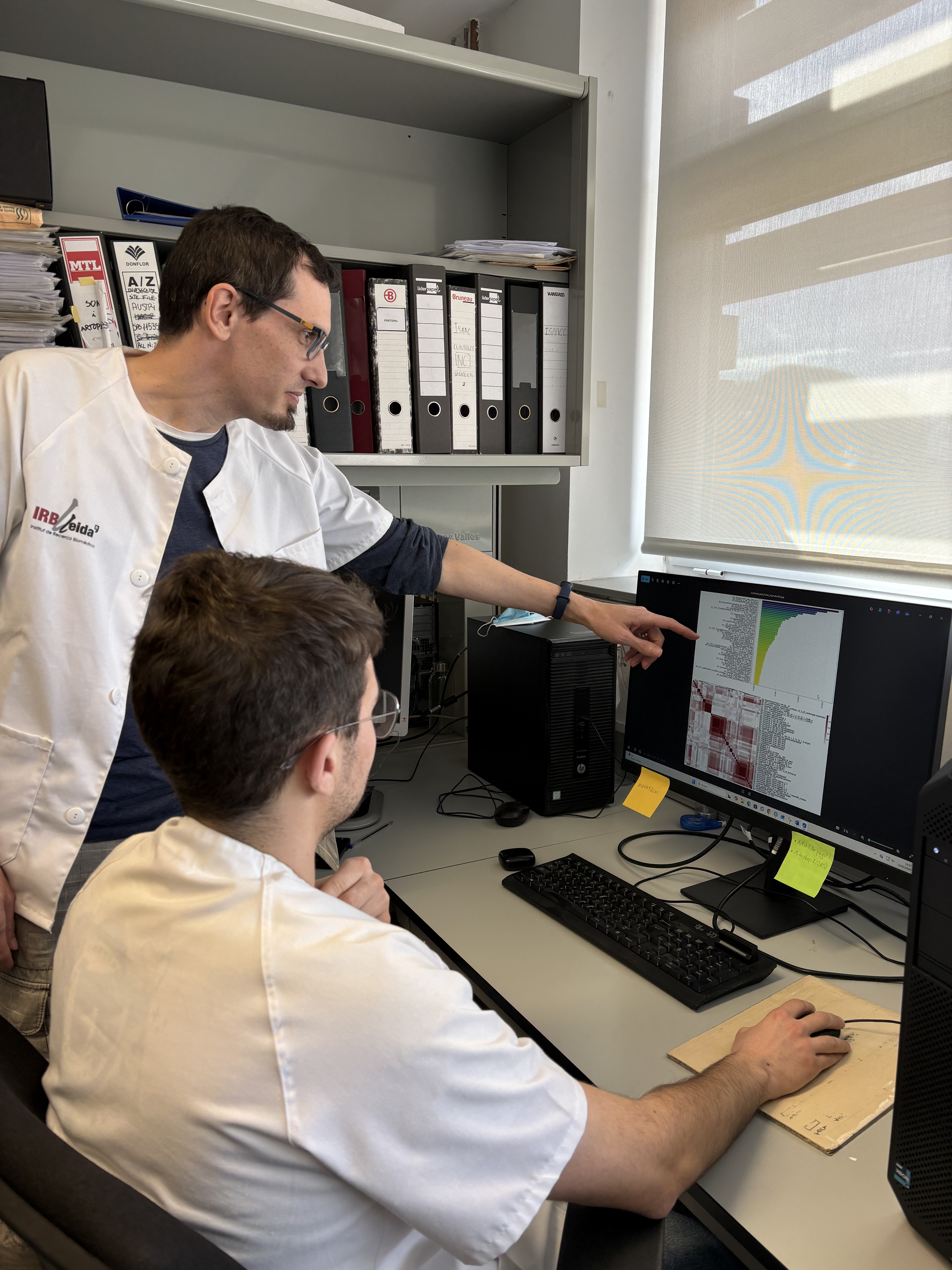
The research has been led by researchers from CIBERES and IRBLleida

