

The UdL obtains €40,000 from the Knowledge Industry programme
Developing veterinary and chemical supplements from sludge
Two projects from the University of Lleida (UdL), which involve researchers from the Lleida Biomedical Research Institute (IRBLleida), have secured a total of €40,000 from the Knowledge Industry programme of the Agency for the Management of University and Research Grants (AGAUR), which is aimed at turning research-generated knowledge into products or services that improve people's lives. One of them focuses on developing a new symbiotic supplement (incorporating probiotics and prebiotics) for pig farms, and the other on obtaining industrial-scale chemical products from slurry without using fresh water, which would be an advantage in the current drought conditions.
In the Seed category, UdL has obtained funding for two projects, each for 20,000 euros. This is Iron-Enriched Postbiotic: Market Study & Pre-prototype Validation for Reducing Economic Loss in Pig Farming Due to Ferropenic Anemia-FerSac25 (Iron-enriched postbiotic: market study and pre-prototype validation to reduce economic losses in pig farming due to ferropenic anaemia), led by Professor of Microbiology at the UdL and researcher at the Lleida Biomedical Research Institute (IRBLleida) M. Ángeles de la Torre Ruiz; and Waste to product - From waste to product (W2P), by Professor of Bioinformatics and also researcher at IRBLleida Alberto Marín Sanguino.
The first will work with the researchers and professors from the UdL, Nuria Pujol Carrion, Judit Ribas Fortuny, José Antonio Moreno and Esther García. In collaboration with the team of the technical director of the Centre for Applied Experimental Biomedical Research (CREBA), Dolores Garcia, they will develop a prototype iron supplement to combat iron-deficiency anaemia in pig farms, a 'highly prevalent disease in piglets, especially in intensive farming,' explains de la Torre. The aim is to replace the current injections of iron dextran with the oral administration of a symbiotic based on 'a biotechnological yeast strain highly enriched in organic, bioavailable and safe iron,' he highlights.
After administering the product as a feed supplement to a group of piglets, the team will monitor various physiological and haematological parameters to assess its effectiveness. 'The knowledge gained from this project can be transferred to the human market, as iron deficiency anaemia is a serious health problem worldwide,' adds the researcher. 'This animal model has a dual health projection: on the one hand, it allows a preclinical trial to be carried out prior to the human model and, on the other, it offers a new alternative to significantly improve pig welfare and production in a sustainable way,' stresses M. Ángeles de la Torre.
Meanwhile, Alberto Marín wants to reduce the freshwater consumption of the chemical industry by using a halophilic bacterium that grows in saltwater. 'Spain has one of the highest levels of water stress among the Organisation for Economic Co-operation and Development (OECD) countries and climate change is likely to reduce average annual rainfall,' warns the professor from the UdL and researcher at the Systems Biology and Statistical Methods for Research group. The starting point for this project 'is a collection of strains developed from pig slurry in our laboratory, already optimised for the industrial production of these chemicals,' he explains. As a result, contaminants such as ammonia, phosphate and sulphates are removed from livestock waste.
'Although we are quite advanced in terms of technology and intellectual property, our research will not be able to reach the market if we do not advance on all the other fronts that are critical for innovation,' adds Marín. This project, which is part of the doctoral thesis of researcher in training Èrika Vilamajó Farré, 'could open up a path for industrial development in rural Catalonia and, at the same time, reduce the negative impact of one of its main economic activities: livestock farming,' points out the UdL professor.
Text: University of Lleida press / IRBLleida
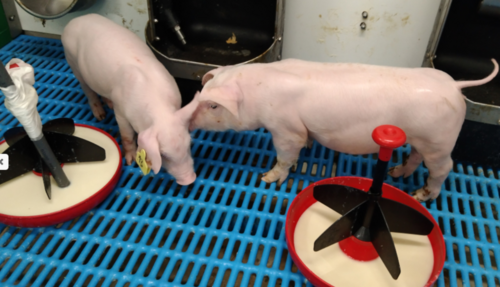
Garrins 'Sus scrofa' / Photo: CREBA

