

New key role of a protein in brain development discovered
These findings open up new avenues for a better understanding of how the brain develops and what may go wrong in developmental neurological disorders
A research team in Lleida has identified a previously unknown function of a key protein involved in brain development, a breakthrough that could improve our understanding of how brain connections form correctly and how our brain works. The study, recently published in the journal Cellular and Molecular Life Sciences, reveals that the cyclin D1 (CCND1) protein, traditionally known for its role in cell division, also has an essential function outside the cell nucleus, in the cytoplasm. The research team has demonstrated that cytosolic cyclin D1 regulates the formation of the cerebral cortex, the part of the brain that has expanded most significantly during evolution and is responsible for our cognitive abilities.
"These results provide a new perspective on the molecular mechanisms that regulate brain development, beyond the classic control of the cell cycle," explained the article's lead author and researcher, Neus Pedraza.
Researchers at the Lleida Institute of Biomedical Research (IRBLleida) and the University of Lleida (UdL) have demonstrated that cyclin D1 is localised in specific structures of neuronal stem cells involved in adhesion and contributes to key processes such as neuronal migration and the proper organisation of the layers of the cerebral cortex. When this function is disrupted, defects occur in brain architecture, even though cell proliferation remains intact.
Furthermore, the study suggests that this alternative function of cyclin D1 is related to its interaction with cell membrane proteins involved in cell adhesion and movement, such as paxillin. This mechanism is key to the proper detachment of progenitor cells from their environment and the subsequent formation of mature neurons. Therefore, the research opens up new avenues for studying alterations in brain development and neurological diseases in which neuronal migration and organisation are affected, such as lissencephaly.
"Understanding these unconventional functions of known proteins may be key to identifying new therapeutic targets in neurodevelopmental disorders and, potentially, in conditions such as cancer, where cyclin D1 also plays a significant role," added the researcher.
"Years ago, when the human genome was sequenced, it was found to contain far fewer genes than initially predicted, suggesting that many of them have multiple functions. The case of cyclin D1 is paradigmatic in this regard; since it regulates cell division and performs other functions, some of which are specific to the development of the nervous system, as we have demonstrated in our study," concluded Joaquim Egea, the project's principal investigator.
The project has been funded by the Ministry of Science, Innovation and Universities, the State Plan for Scientific and Technical Research and Innovation, and the Government of Catalonia through the Agency for the Management of University and Research Grants (AGAUR).
Article: Pedraza N, Rocandio D, Zammou B, Monserrat MV, Ortiz-Brugués A, Marfull-Oromí P, Chauhan D, Encinas M, Dolcet X, Ferrezuelo F, Garí E, Egea J. Cytoplasmic cyclin D1 modulates brain cortex development. Cell Mol Life Sci. 2026 Apr 14. doi: 10.1007/s00018-026-06178-1. Epub ahead of print. PMID: 41981298.
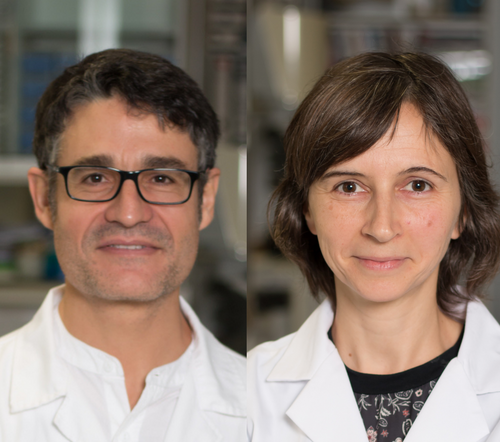
The researcher Joaquim Egea and Neus Pedraza

