

The Marta Santamaria Fellowship supports research into liquid biopsy at IRBLleida with a view to identifying more effective and less toxic cancer treatments
The research staff of the Cancer Biomarker Research Group (GReBiC) would like to thank everyone for their donations to all editions of the 'Cursa de la Dona Hyundai'
The Cursa de la Dona Hyundai has reached its 11th edition in 2026 as a fully established and growing project. With the aim of promoting women's sport and reinforcing the charitable aspect linked to the Marta Santamaria Scholarship and breast cancer research at the Lleida Biomedical Research Institute (IRBLleida), its contributions have made it possible to continue research into metastatic breast cancer at IRBLleida.
The Cancer Biomarkers Research Group (GReBiC) of IRBLleida, in collaboration with the Arnau de Vilanova University Hospital (HUAV), is developing an innovative project based on the analysis of pleural fluid - a form of liquid biopsy - to select more effective and less toxic cancer therapies. The project is being carried out in coordination with the Oncology and Internal Medicine Services of the HUAV and involves oncologist Serafín Morales and internist José Manuel Porcel.
The project focuses on patients with breast cancer who present to the hospital with pleural or ascitic effusion, a common situation in advanced stages of the disease. From this fluid, the research team analyses whether it contains tumour cells and studies their genetic alterations using DNA mass sequencing techniques (NGS). This analysis allows for the identification of specific tumour mutations that can guide the choice of the most appropriate treatment.
'Thanks to the contributions from the Marta Santamaria Grant and the Hyundai Lleida Women's Race, we can continue to research, because every bit helps,' has stated the group's researcher, Izaskun Urdanibia. 'Charitable initiatives like this allow innovative projects to be developed locally and offer new opportunities for patients,' she added.
In addition to the genomic study, the team is working with a pioneering approach: the ex vivo culture of circulating tumour cells present in the pleural fluid. These cells are kept alive in the laboratory and are exposed to different drugs before being administered to the patient. This way, it is possible to check which treatments are most effective at destroying the tumour cells and which ones they are resistant to, allowing the oncologist to select the best therapeutic option from the outset.
'This approach avoids administering treatments that will not work and reduces the unnecessary toxicity associated with many cancer drugs. It also opens the door to detecting resistances and seeking alternative therapeutic combinations in cases of relapse, a common situation in metastatic tumours that change their characteristics over time,' explained the researcher, Serafín Morales.
The project's initial results show the potential of this strategy to improve clinical decision-making and advance towards truly personalised medicine. It is a complex and costly procedure, which requires advanced technology and coordinated work between the laboratory and clinical researchers.
The research team aims to expand the number of patients studied and establish this strategy as a clinical tool that allows for the more precise selection of treatments, improved prognosis and reduced toxicity. The ultimate goal is to advance towards precision oncology, where each patient receives the most suitable treatment based on the actual characteristics of their tumour.
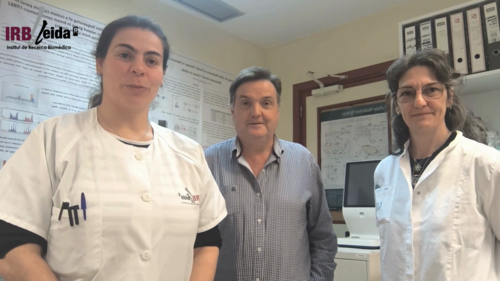
The researchers Izaskun Urdanibia, Serafín Morales and Ana Velasco

