

The experiences of migrant agricultural workers in Lleida are helping to redefine preparedness for future pandemics
The study on the situation of migrant agricultural workers during the COVID-19 pandemic forms part of the NUDO-Lancet PRIME Commission, an international initiative that proposes a new model for preparedness for health emergencies
Researchers from the Healthcare Research Group (GReCS) at the Lleida Biomedical Research Institute (IRBLleida) and the University of Lleida (UdL), Montserrat Gea-Sánchez, director of the UdL-ASISA Chair, and Gemma Espigares-Tribó, have led the case study carried out in Spain as part of the NUDO-Lancet PRIME Commission. Their research, which focuses on the experiences of migrant agricultural workers in Lleida during the COVID-19 pandemic, forms part of a wide-ranging international project recently published in the journal The Lancet, which proposes a new model for preparedness for future health emergencies.
The NUDO-Lancet PRIME Commission was established in the wake of the COVID-19 pandemic with the aim of analysing the factors that left millions of people unprotected during the health crisis and how to prevent this situation from recurring in the future. The initiative has gathered evidence from 20 countries across all World Health Organisation regions, combining case studies, community interviews, scientific reviews and epidemiological modelling.
The case of Lleida: a key contribution to an international project
The case study carried out in Spain has focused on the situation of migrant agricultural workers in Lleida during the COVID-19 pandemic. "The research shows how difficulties with registration, precarious housing and administrative issues increased the vulnerability of this group and hindered their access to healthcare services and social protection measures," highlight the researchers from IRBLleida and the University of Lleida (UdL), Montserrat Gea-Sánchez and Gemma Espigares-Tribó. At the same time, the study highlights initiatives launched in the region that helped to mitigate the impact, such as the provision of dedicated accommodation to ensure safe isolation during the pandemic.
The study, led from Lleida, has enabled this local experience to be incorporated into an international analysis that has gathered the experiences of 819 participants from 20 countries around the world.
A more equitable distribution of vaccines could save a further 2.7 million lives
One of the commission's main conclusions is that a more equitable distribution of vaccines could save millions of lives in a future pandemic. Based on a simulation of an influenza A scenario, the researchers estimate that the rapid development of vaccines could reduce mortality by 59 per cent. Furthermore, if doses were distributed according to population criteria rather than primarily on the basis of purchasing power, a further 2.7 million deaths could be prevented worldwide. Measures aimed at increasing confidence in vaccines would prevent a further 1.9 million deaths.
The findings highlight that equity in access to vaccines is a key factor in reducing the impact of future health emergencies. In this regard, the commission also concludes that whilst many countries had pandemic preparedness plans in place, these did not ensure that everyone had effective access to health and social protection when the systems came under strain. The report advocates a paradigm shift: moving from pandemic preparedness - which focuses on the existence of plans and resources - to pandemic readiness, which is geared towards verifying whether these mechanisms actually work in emergency situations.
According to the commission, factors such as job insecurity, housing difficulties, administrative barriers, mistrust of institutions and weak social protection systems can become key determinants of vulnerability during a health crisis. For this reason, the researchers argue that preparedness for future pandemics must go beyond emergency plans and incorporate aspects such as access to housing, healthcare services, information and social protection. In this regard, the commission argues that the experiences of vulnerable groups, such as the migrant agricultural workers analysed in the study led from Lleida, must be incorporated into planning and decision-making in order to build systems that are better prepared, more equitable and more resilient in the face of future public health emergencies.
Text: IRBLleida Communications and Press Office
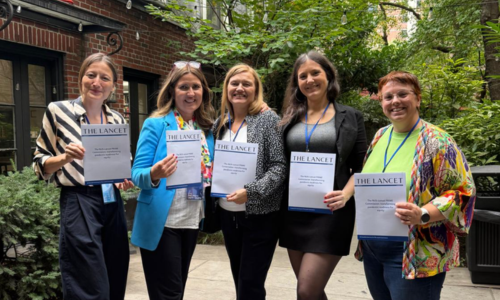
In the centre of the photograph is Montserrat Gea-Sánchez, and on the far right of the picture is Gemma Espigares-Tribó

