


Immersive virtual reality can help reduce the anxiety of emergency professionals
Research staff from Lleida validates this system with the financial support of the Lleida company Romero Polo
Immersive virtual reality (IVR) can become a useful tool to improve the emotional well-being of health professionals in high pressure environments, according to a research led by Lleida professionals from the Arnau de Vilanova University Hospital (HUAV), the University of Lleida (UdL) and the Biomedical Research Institute of Lleida (IRBLleida). The research has been published in two articles in the journals Cureus and Frontiers in Medicine.
The study, led by the territorial clinical director of Emergency Care, professor at the University of Lleida, researcher at the Open University of Catalonia and head of the ERLab research group, research in emergencies and emergencies, Oriol Yuguero, has had the financial support of the Lleida company Romero Polo. The research evaluated the impact of an immersive projection-based program on Emergency professionals. The aim was to analyze whether four weekly sessions of 20 minutes could influence anxiety levels, burnout, perceived stress and some physiological stress markers, such as heart rate and blood pressure.
The results indicate that the programme, called MK360, is feasible and well tolerated, with good participation and adherence. "Although reductions in perceived stress were not statistically significant, a tendency to decrease stress and positive changes were observed in some burnout measures (the less tiredness and cynicism and a greater sense of academic effectiveness)" Yuguero explained. In addition, many sessions showed an immediate decrease in heart rate and systolic blood pressure, physiological indicators associated with a relaxation response.
Of the 198 eligible people, 131 enrolled in the study and 67 completed the entire protocol, which included a phase with virtual reality, a rest period (washout) and a control phase with regular rest. "Around 25% of participants claimed to feel emotionally better after the program, and none stated worsening," the researcher added.
The authors stress that, due to the pilot design and reduced sample size, broader controlled studies are needed to confirm effectiveness and determine how this type of immersive interventions can be integrated into student support programs. This approach combines technology, psychology and education to offer additional tools in the fight against stress and burnout among future health professionals.
In a context where anxiety and burnout significantly affect emergency professionals, this study opens the door to integrating immersive technology as a complementary tool to support work well-being.
Articles:
- Roma, G., & Yuguero, O. (2026). Feasibility of a brief group-based immersive 360° mindfulness program for stress-related outcomes in health sciences students: a 4-week pre-post pilot study. Frontiers in Medicine, 13. https://doi.org/10.3389/fmed.2026.1740585
- Yuguero Torres O, Lopez-Vena I, Pardos C, et al. (February 24, 2026) The Use of Immersive Virtual Reality in Reducing Anxiety Among Emergency Healthcare Professionals. Cureus 18(2): e104170. doi:10.7759/cureus.104170
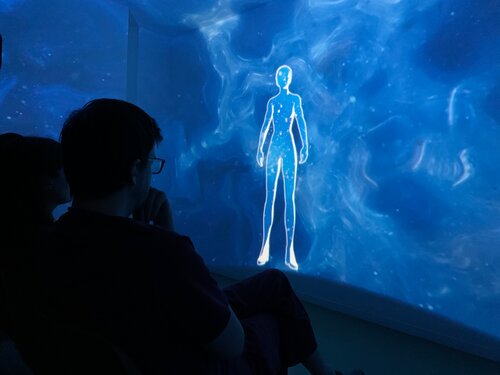
The results indicate that the program, called MK360, is feasible and well tolerated, with good participation and adhesion
